This transcript is auto-generated and may contain errors.
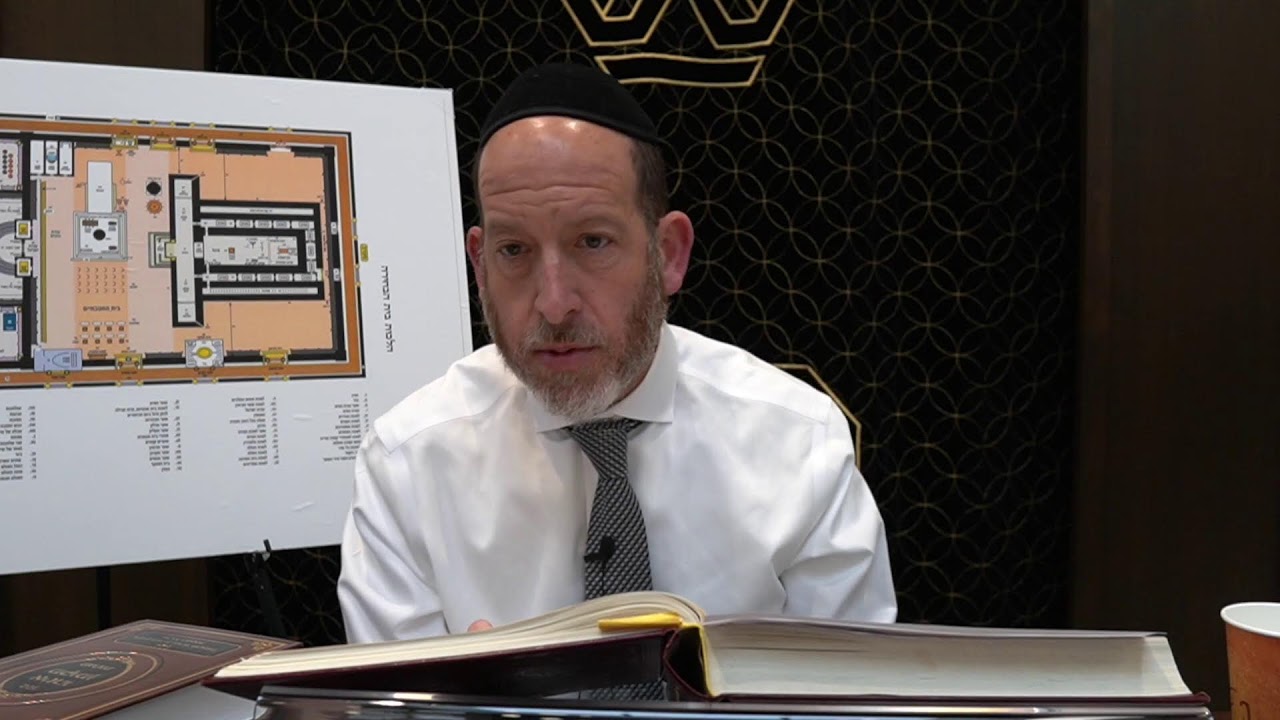
0:25 All right, so I'll say good morning or good morning or good to walk. What a great is a close bar a sham to be able to begin. I think this is our last Oh, no, this is our second to last full week of Manachus. I think Manachus ends I think a week from Friday. 0:40 Is that possible? Okay, so all right. So, good. So, our second to last full week of Manachus and it is going to be jam-packed with incredible spiritual beauty. Each and every day I begin by thanking all of our sponsors. So, thank our calendar sponsors for the month of ER. 0:55 I bought the little table Manachus and Suzy Schoenfeld for dedicating all the Sherman this month as a close for the first time before Hershey and Pesha Yenta. Pesha Yenta result sweet mayor Alibi Ben Yochai Ben Bas Soriata from Al Bas Fega. 1:10 Mayor Avram Ben Fega Chayu Doven Peroshiri Ben Chayu. Yochai Ben Rifka Bas Chayu Sherman of file Ben Chayu Kira and call Chole Israel as well as for an Aliyah for the Nishama of Suzy sister Esther and Brown who's who's yard site was on Rosh Chodesh ER and in whose memory this building the show building is dedicated by the Brown 1:34 family. The week of learning sponsors Ari and Haley Lichtman in Nishmas Haley's mother Lynn Leah Bas Ruben Mayor and our family sponsors for today I am Sarah Steinberg in the schools of continued health for Shulamis Bas Sosha and for an ultimate of a full Shalimah as well as by Seth and Rachel Rothenberg Leah Nishmas Seth's sister whose yard 1:57 site is today, Naomi Tova Bas Zev. We hope that with the merit of our Torah and mitzvos, all of the nishamos of all of the families in all those who need a refuah sheleimah, together with kol Yisrael, should have a yeshua sheleimah. Look after our precious brothers and sisters in Eretz Yisrael. Shall our holy soldiers be successful in all of their endeavors. And may all of us abide the month of Iyar should bring shalom, bracha, and simcha for all 2:21 of klal Yisrael. And with all of that, let us begin. Today's daf is tzadik ches 98, and we are picking up on tzadik ches amud alef, seven lines down from the top. The kama ama beinonis. How much is an ama beinonis? 2:37 The Gemara says, remember again we had this, we began this discussion in yesterday's daf, about the size of an ama. And first of all, welcome to our eternal guest, Mazel Tov, Mazel Tov to our eternal spark of our mitzvah, literally just yesterday was his bar mitzvah. He did a magnificent job. Thank you for Thank you for bringing your father. We appreciate it greatly. Baruch Hashem, Mazel Tov to Netanel, Mazel Tov to Daniel. And may Hashem continue to 3:00 model simcha, nachas, and bracha. Incredible, what a beautiful, beautiful simcha bizochah to such nachas from our children. And our children should have nachas from us, im yirtzeh Hashem. The kama ama beinonis. How much is an ama beinonis? So the Gemara says, Amar Rabi Yochanan, "Sheish tefachim." Rabi Yochanan says, "Six tefachim." Amar Rabi Yosi bar Avin, "Af anan ami teninan so an ama beinonis is six tefachim." So Rabi Yosi bar Avin 3:23 tell me we also learn this. And here Omar "Hashulchan arco shnei masar verachbo shisha." Now, because we said the shulchan, its length is 12 tefachim and its width is six. Now, again, they both said the dimensions of the shulchan are one by two amos. One by two amos. So the fact that the shulchan is one by two amos, and when measured in tefachim it's six by 12, indicates to us what? That a 3:47 loch ama beinonis ama is six tefachim. We're calling ama beinonis is six tefachim. So Gemara says, "Michlal d'havya ama and the fact that we're calling an armor of 6 and I'm a bean on it would seem to indicate that there is an armor that is a larger armor. So is that is that true? 4:06 So in so yes that is true but incredible but stay almost there are two armors in Shushan Habira. Now what is this? Take a quick look at Rashi stay almost Rashi says Jose It's in Rashi in the short lines about three lines in. 4:23 Stay almost Maclo's Shabahem almost so when they say there are two almost there are two two armor measuring sticks. Two armor measuring sticks and two armor measuring sticks and each of these measuring sticks was a slightly different size. Where were these measuring sticks kept? In a place called Shushan Habira. Now Shushan 4:47 Habira is not in Persia. Where is Shushan Habira? Look at Rashi Shushan Habira hey there a Shushan there was ultimately again there was one one room that was built by the eastern gate of the courtyard of the base on the dash. Shushan Habira and it had on it a mural of 5:11 Shushan Habira of Shushan. So again there was an area by the eastern gate of the courtyard of the Azara and it had a mural of Shushan on it. We'll discuss why exactly and a mural of Shushan. The point over here is in this room in this chamber ultimately they kept these two measuring sticks okay. One measuring stick was kept one measuring stick was kept 5:35 on the northeast corner and one was kept on the southeast corner. Okay Shushan Habira the one on the northeast corner you see Shushan you see Shushan Habira Etzba. So again, it was the one on the northeast corner was, listen to this, one finger I'm sorry, a half a finger breath larger than 6:02 the ama measurement of Mosha Rabbeinu. Right? Mosha Rabbeinu had a had a ama measurement cuz after all remember they had to build the Mishkan. So the So the measuring stick that was kept on the northeast corner was a half a finger larger than the measurement of Mosha Rabbeinu. Shal Keran Mizrachis, first wide line, Shal Keran Mizrachis Dromis, the one on the southeast corner, Chaisi Yeseira al Chazi Etzba. And the one that was kept 6:26 on the southeast corner was a half a finger larger than that one, than the first measuring stick. Nimtze Yeseira al Shel Mosha Rabbeinu Etzba. So the second one was a full finger breath larger than the one of Mosha Rabbeinu. So both of them So again, each of these each of these measuring sticks was slightly larger than the ama of Mosha Rabbeinu. 6:47 The one kept on the northeast corner was half a finger breath larger, the one kept on the southeast corner was a full finger breath larger than Mosha Rabbeinu. So the Gemara says, "Lama amru last kind of what Why Why do they have this? Exactly, why was this necessary?" This is very interesting. Kedei She'ar Umnin Notlin Diktanah U Machzirin Digdolah. Cuz the Gemara says when they would hire craftsmen to do work, this is 7:09 so fascinating, when they would hire craftsmen to do work in the Beis Hamikdash, when the craftsmen went ahead and came up with like his What's the word? Not Not invoice. Yeah. Estimate, thank you. When he came up with his estimate, right? So the he would charge based on the size of the smaller measuring stick, but he would deliver based on the larger measuring 7:33 stick. Right? You would say so You'll say to yourself, by the way, who in the world would do business with the Beis Hamikdash if that's what you have to do? Because I will say when you're involved in Kehilla, it's not about what you're getting back. It's about your ability to give. You're right, nobody went into business, nobody did business for the base of because they were turning a profit. In fact, it was just the opposite. You were losing 7:57 money. You were losing money, but it's not called losing money when you have the opportunity to build something. You have the opportunity to build the base of the So, this is what they would do. So, you would give your estimate based on the local materials and labor smaller measure, but you would deliver based on the larger measure. Now, this is also done for a practical purpose. K'dei sheya'amdu l'notel miktanah u'makzirim migdolah. K'dei shelo yavo lidei 8:20 me'ilah. Now, you know what I'm saying, the truth is this was also to avoid me'ilah. Because in the event that somehow you ended up shortchanging the base of the It's not just that you're really not a good guy if you shortchange the base of the right, but also it's a me'ilah issue. You are going to be benefiting from benefiting from consecrated property. So, in order to avoid any of 8:43 that, by definition they would have these different measures. Quite interesting. If you take a look [clears throat] at Rashi, K'dei sheya'amdu l'notel miktanah shehayah gizbar masneh im ha'umanin. K'ch shek'chach amos binyan u'l'vad k'vais. K'ch shek'chach amos shel Mosheh. So, interestingly enough, u'makzirim l'midah achas k'dolah sheshirah la'es k'dei sheyosifu al t'na'ei ha'mish'lahan shelo yifresu. So, 9:07 the gizbar essentially again would contract with them. So, you know, this is very interesting. So, when when the estimate was given when the gizbar would contract with them, the the the job was um what's the right specked out? Good. Specked out, right? Based on the amos of Mosheh Rabbeinu, right? So, that that that's that's what that's what the pricing was based on. But ultimately 9:33 again, the job was expected to come in using one of the larger amos measurements. Now, you got to both sides. Now I understand why I have to have a larger armor measurement. But remember, there's two larger armor measurements. There's one that's a half a finger breath larger than Moshiach and one that's a full. Why do I need both of those? 9:50 So why do I need both of them? One was for gold and silver and one was for building. See that was is very interesting. The one that was a half finger breath larger than the that was for gold and silver because gold and silver is expensive and it's not fair to the merchants to make them go above and beyond the full finger breath. So that was half a finger breath was for gold and silver. Full finger 10:17 breath larger, that was for building. How is it building? Look at Rashi. So ultimately again for gold and silver you only have to use the half to deliver based on the armor measurement that was half a finger breath larger and ultimately again for building itself for building itself they have to go ahead and do a full finger breath larger. I will say, I just want to draw your attention to something amazing, right? So we're going to we're not finished with this, 10:51 but just listen. So by the by the eastern gate of the Azara the courtyard of the Beit Hamikdash, they had a room that was called Shushan Habira. That was the room. It was called Shushan Habira because it had a mural of Shushan. I'm going to come back to that. And what was kept in that room? Two measuring sticks. Two measuring sticks. So again, on the on the we'll call it the northeast corner was the one that was half a finger breath larger than the armor of Moshiach 11:15 and on the southeast corner, the one that was a full finger breath larger than Moshiach. We'll say what the level of specificity where you have the placement of the measuring sticks. Why? Well, first of all, on a practical level because it's probably it's really not discernible to the eye which is which and you can't get that mixed up because for gold, silver and the mix a very big difference. And also that means there's a tremendous 11:37 mussar haskel as well, which is we speak about this all the time. Life is all about creating seder. All about creating order. And if you really want to be successful and productive in life, there has to be seder in everything. You can't allow anything in your life to be hap hazard, right? To just be a mess. This goes back to our Shabbos I got the laundry washed 12:01 also about creating cleanliness, creating seder. Like I think I I mentioned in the Shabbos I got the laundry washed that, you know, there are many stories of great Russian yeshiva rabbos that when they would go to look for a potential potential son-in-law for their for their daughter, so they would not go to the base medrash to see who was learning most intently. Rather, where would they go? To the dorm. 12:24 To the dorm. They wanted to see what kind of room does a young man keep because someone if your room is a mess, chances are your life is a mess. That's just the way that it works. If you don't have seder, it's very difficult to go ahead. And that's why generally kids have messy rooms cuz kids generally don't have orderly lives. That's the job of a parent create seder for them. The 12:48 challenge is when messy kids become messy adults, that's when things become much more complicated. So there's a tremendous mussar haskel in this. In the base hamikdash I will say this what you I'm going to get to this later on today with some base hamikdash Everything has a place. Right? There's no such thing like the base hamikdash is not like your garage, you know, where where whatever, you know, just I don't know where to put it. 13:08 Let's put it here. Right? In the base hamikdash every single thing has a space. And by the way, if it doesn't have a space, then what? Then what? Then it doesn't belong there. Right? There's no such thing as hey, where do we put this? Right? No, in other words, it has a designated area. If it doesn't have a designated area, it's not going to be something that's eternal beside. 13:29 That's why they make something that's called a kidusha. Because at the end of the day, seder, order. And again, order means so many things. Order is not just about your stuff. Order is about your schedule. Order is about how you manage your time. Seder is the key to success in life. And that's why everything in the base hamikdash is there's a seder with everything. There's a schedule. And even the measuring sticks. This 13:53 measuring stick goes here. This measuring stick goes here. Cuz if you want to live a life of kidusha, a life of productivity, a life of living a sham, there must be seder in everything I do. Let's go back there. Mar says it's not awesome. Shaar Hamizrach. Al av Shoshana Sura. So remember again what say in this eastern gate in this room in this eastern eastern gate, there was a mural of the capital city of 14:15 Shushan. Naimo. Why why was there a picture of Shushan there? So the Gemara says Rav Chisda, Rav Yitzchak bar Rav Dimmi, "Kad amar Kedishaya dumeh heichan bo." So that the Jews should know where they came from. Cuz remember what say remember again, it was Persia that allowed for the rebuilding of the second base hamikdash. So it's so it's so therefore again the first opinion says Rashi says, "V'iru meheichan bo v'itnu 14:40 hakaras hatov Shushan sham." We should give hakaras hatov. We should express our gratitude ultimately again to the country that allowed us to rebuild the base hamikdash. So what say is incredible. Not not not not that not that it was a walk in the park under the Persian Empire. But at the end of the day, they are the ones who allowed us to rebuild the base hamikdash. And therefore it is important for us to have hakaras hatov. Always important to go 15:03 ahead and express gratitude to any foreign nation, any foreign country who helps the Jews out. "V'chad al makdishin imas Malchus Aleph." The other one, interestingly enough, is it wasn't as much about gratitude as much as it was about fear. In other words, Persia and and you see we'll see this was in order that we would not 15:27 rebel. In order that we would not rebel, Jews would not rebel, remember who allowed you to do this, right? Who allowed you to rebuild the base of the show was Persia. So it's an interesting enough sounds like according to the first opinion, it's quite possible that the mural was commissioned by the Jews. We wanted to express our cards at all but according to the second opinion could have been mandated by Persia because Persia did not want us to rebel, wanted us to remember that we existed 15:51 and the second base of God came about ultimately because the good graces of the Persian Empire. The old he must have a lot. So we'll say really always the reverence, right? The right the the reverence of the mouth host of of the kingdom that you live in should be upon you. So we'll say this is actually very important you saw it. A person should 16:14 always have respect for government. Now where do we see this from because the past it says the year to call in the in line. They So what says is that you buy more shoving right? So more shoving says the battle. We are the all of your servants. This is more shoving power what's going to happen. All of your servants all power speaking to power. Power all of your servants are going to come to me. 16:38 They're going to bow down to me and they're going to beg us to leave Egypt. This is more shoving telling power what's going to happen. Now if you don't say it says the evil of the day local Malay. If you notice more shoving doesn't say power you're going to come running begging me to leave. Rather what does he say? And by the way that's ultimately what happens. He says your servants. Cuz more shoving was differential to the monarchy. More 17:02 shoving was differential even to power. Past [clears throat] it says that area I love you was given a burst of divine strength and he ran before the chariot of Ahab. Now Ahab was unfortunately a big Russia. A big Russia with a beautiful neshama who so many times throughout life wanted to do the right thing but couldn't seem to summon up the courage to make that shift. But yet interestingly enough Eli ran before 17:35 his chariot. Why? Because you have to be you have to express covered ultimately to the government. Even if it's not a great government, right? Even if it's not the government that you like but at the end of the day it has come out to say this is incredibly important, incredibly important because you know in general we live in an age where there's very little respect for anything, right? And the goal is to usually deconstruct any form of 17:59 authority. But at the end of the day it is incredibly important that we always act with respect and with deference to government. Whether it's to the president or whoever it might be. You don't have to agree, right? That's why we have the power to vote. You don't even have to like but one always has to be careful about speaking in disparaging terms about leaders. First of all 18:22 because leaders don't get to where they are without Hakadosh Baruch Hu. Right? It's It's at the end of the day it's not the voters who determine who is the president or who is the prime minister. It's the Ribono shel Olam ultimately I am who choreographs all of these things. As such there's a certain covet that is always due to the malchus. A certain covet that is always due to the monarchy or to the leadership wherever you live. 18:46 Again, disagreement absolutely fine. Disparagement usually not a good idea. Moshe Rabbeinu is differential to Paro. Eli is differential to Ahab. Also because in general we'll say well this is a different thing. It's best not to speak disparagingly about anyone. You know we'll say it's kind of like people who are honest in 19:09 business with some people but with other people, they cut corners. I'm not a businessman, but I would venture to say, probably don't do business with people like that because chances are if you're dishonest somewhere, you may be dishonest everywhere. Person who speaks like in a derogatory or disparaging way about anyone, it's just not the way a Jew speaks. And 19:34 certainly again to leadership who was placed in a position by again like and not like, agree, disagree. Of course, there's always way to disagree agreeably. But the might says always a common that's due to the No one I respect the but also a Jew should always hold himself to a higher standard about how he talks and how he conducts himself. Incredible. So you want to go go this beautiful the so I will say so this is actually quite 19:57 fascinating. So whoever is quoting the from the Ezekiel. The talks about a number of different things that are going to occur in the Messianic era. One of the things that is going to occur literally from the leaves will be for a remedy. So leaves of what? Take a look at what he says this is so beautiful the truth of So I will say This is really beautiful. When 20:24 comes and the third base is rebuilt, there is going to be a stream that comes out of the holy of holies. So is that not beautiful? I don't know what it means, but whatever it is like it's going to be a stream that you know, there's nothing more beautiful than water, right? There's something just about being by water that is just so soothing, so beautiful. So there's going to be a stream that comes 20:47 out from the holy of holies. goes on the first of the call it all Excuse [clears throat] me. And what's amazing is on each side of this stream is going to be all types of fruit trees. 21:04 So So only is there a stream coming out of the Kodish Hakodashim, but there's going to be fruit trees spreading out sprouting up on all sides. The ale of the tree for and the leaves of those trees is going to have medicinal properties. It's going to be able to remedy illness, remedy sickness. The ale of the tree for what type of what type of remedy? 21:25 Bar Adimi One said literally again, it will open up the mouth on top, which means it will allow people who are mute to speak. The other said that it'll be a remedy for infertility. >> [clears throat] >> It'll open up the womb. 21:45 It mark healing mark says more explicitly, it's going to go ahead and allow the mute to speak. It'll create it'll be a remedy for infertility. You know, I'm saying isn't that beautiful? Just again, sometimes in life you don't have to worry about you don't have to How is it going to work? How are you going to get there? What are you going to grab? Don't worry about it. Don't worry about it. 22:08 Here's the just just just know that there are so many incredible and beautiful things in store for us, right? You know, we have such a such a beautiful future that is just waiting for all of us. For all of for the world. And this is just like a little a little a little snapshot of what of what it's going to be. Those leaves that you're going to pluck off the trees that are growing by the banks of the river that's coming out of the Kodish 22:32 Hakodashim will heal everything. It's just beautiful. Turn on the volume. It's going to say how the person just said isn't that back back to back to back to my bottom. If we were to just say you'll take fine flowers and you will make 12 loaves, right? And you will place them you will place them into two piles. 22:59 But and say six and six in each pile, right? In each stack. I used to I would have thought I would have thought that one stack could be four loaves and one could be eight. In other words, the Icarus you need 12 loaves and you need two stacks. 23:16 But maybe it doesn't matter how much is in each stack. Therefore, the positive says six in each stack. We do now my Steinman says six of my and if it would have said 12 loaves six in a stack below and it wouldn't have said 12. I used to say six six. 23:39 I would have thought maybe it's three stacks of six loaves each which gives you a total of 18. Like therefore the positive says no, it's only 12. We do now my Steinman says six of my Steinman says six of my Steinman >> [clears throat] >> Excuse me. 23:58 And if it would have said Sorry. If it would have said Steinman says 12 loaves 12 loaves and ultimately again right I'm sorry if we do now my Steinman says Steinman says Steinman says 12 loaves and stacks and it would not have said two and six. I would have thought I used to say six six. 24:20 I would have thought maybe it's three stacks of four loaves each. Therefore, again my Steinman says Steinman says Steinman says Steinman says therefore it says again two stacks ultimately made up of six loaves each. So what do you see from here? 24:41 So what say had it not said these three not that as much three but rather again it's really three different phrases. 12 six and two, right? 12 loaves, two stacks and each stack of six loaves. You need those three pieces of information because without them, you could have drawn a whole bunch of other conclusions. How can So how do I arrange the upon him? No 25:03 saying I create two loaves of six loaves each. The Muslim Steve, thank you so much. Thank you. Oh, that works. Thank you. Shkoyach. You say if I need anything from you, I should ask Matt. That's actually it's good. Okay, good. Thank you. Thank you. 25:31 He's your guy. He's your guy. You got it. Got it. All right, everybody needs a Steve. You know, it's it's Shkoyach Steve. Thank you. Thank you. So the Mishna says as follows. And therefore again if you ended up making two loaves, two sorry, two stacks, one of four and one of eight, ultimately again you're not yotzei. Okay, good. So the Mishna says as follows. What 25:56 was it is very interesting. What happened if you ended up making two stacks of seven loaves each? So what did I do over here? I added on two extra loaves. What's the status now? Does it Does it have a negative impact? Is that a problem? Not a problem. Rebbe says it's not a problem because at the end of the day we can just view the upper loaves as if they don't exist. 26:22 But here's the problem. What's the problem? So Rebbe said we had this last week but tomorrow is going with the first opinion. Where do you put the levana? The levana is actually placed on top of the top loaf, right in the interior of the top loaf. So the problem is if there's an extra loaf there, isn't that a isn't that an interposition? But how about the top of the loaf? 26:49 Rebbe the Tanna made the Al B'Samim. Rebbe goes according to his reasoning, right, because Rebbe says ultimately al means next to. Al means next to. It doesn't have to mean on top. The Sanhedrin Rebbe Omer ben Assa al maarachas levona v'zako, you shall place on the loaf al maarachas pure levona. Al basamim, al doesn't have to mean on top. 27:14 Rather, what could al mean? Next to the loaves. So, the Gemara says al basamim akah Omer al basamim oh inah al al mamash. You said al means next to, but maybe al means a little bit on top of. Kishu Omer v'sako al aron as paroches have we Omer al basamim? Suppose in the same way that it says you shall place the paroches on the aron. Al, but that's talking about the 27:38 paroches, the curtain between the kodesh and the kodesh hakodashim. So, obviously again the paroches is not on the aron. Where is the paroches? Where is the It's next to the aron. So, you see from here that al means next to. So, let's remember again, this goes back >> [clears throat] >> this goes back last week to last week's machlokes that we had about remember again the size of the shulchan, the size of the lechem hapenim. So, was there 28:01 space in between the two stacks where the levona was placed or was the levona placed on top? So, Rebbe obviously goes with the opinion that the levona is placed in between the two stacks. Okay, good. And if al means next to, credible. Tana b'rabbanan omerin. It's actually very beautiful. Kol hakelim sheb'veis hamikdash arko l'arukho shel bayis chutz me'aron she'arko l'rochbo shel bayis. So, in 28:26 general we saw we actually the Mishnah also mentioned this as well. All the utensils of the Beis Hamikdash were generally a place they were placed they they they they were placed lengthwise corresponding to the length of the Beis Hamikdash. Um thank you. 28:44 We're now we're get into this a little bit for just a moment. Right, so they they were placed I have my pointer. Yeah. Don't make me use my finger. Come on. It's It's 2026. I should know that. It's It's all right, Jeremy. Don't worry about it. It's fine. It's fine. I actually have it close to me. It's good. 29:01 Jeremy, it's good. It's good, I promise. But this is going on your annual review. I'm just telling you. So as I said, if you notice over here, remember I'm going to reference this. All of the All of the utensils of the Beis Hamikdash were placed lengthwise. Right? So the length of the menorah goes in the length of the Beis Hamikdash, length of the shulchan, except for the aron. Now, interestingly enough, this picture This picture is actually not pictured the way the the aron was 29:27 actually We'll discuss why that is. But the way the aron I just I just I I Right before the shiur, I put out for you a picture on the chat um just how the aron was arranged. The aron was the exception to this rule. The aron was like this. I don't know if you can see this. So the aron was like this. So actually the length of the aron went across the width of the Beis Hamikdash. This is the 29:51 exact image that I just put out to you. And again, you can see we're going to talk about the the badim the the poles in just a moment. So turn up on up. Kol hakelim shel Hamikdash arkan la'orech shel habayis. So all the utensils of the Beis Hamikdash their length went according to the length of the Beis Hamikdash chutz mi'aron. With the exception of the aron she'arko larochav shel habayis. That literally again, the width of the aron 30:15 went went across Sorry, the length of the aron went across the width of the Beis Hamikdash. Keichar haya munach. This is how it was situated. Keichar haya badav munachin. And this is how its poles were situated as well. So you might say, "What does that mean?" Ma kam arachi kamar keichar haya munach midei badav keichar haya munachin. This is how it was arranged because this is how its 30:39 poles were arranged. Now I'll also say Now, what the imarah is to focus on over here is as follows. That interestingly now, one would have thought that intuitively, right intuitively, and again this is the exact image I posted on the chart. You would have thought that the poles of the Aron ran along the length of the Aron. But as we're going to see now, in fact the poles of the Aron were situated by the width of the 31:04 Aron. See, the Aron was actually carried carried by its by its width not by its length. The poles were on the sides of the width not along the sides of the length. And therefore again, when the Aron sat in the Beit Hamikdash, it sat with its width with its length across the width its the length of the Aron across the width of the Beit 31:27 Hamikdash. And we're going to see as such, the poles extended out into the curtain. That's what we're about to see right now. So the Gemara says, "Uvada d'minalan?" How do you know? Now what I'm about to say now what that would mean essentially is that the poles themselves extended extended east to west. Right? East to west. Remember again what I'm about to say, just to get your orientation cuz this picture is is a little bit off so 31:50 I'm just going to give you important. This is east, west, south, north. I know what you're going to say, "Flip the picture." No. I'll tell you why. Cuz then all the Hebrew's upside down also, right? The the whole orientation the whole orientation is off. So the only thing again, east, west, south, north. 32:07 That's all. So the Gemara says as follows, "Uvada d'minalan?" How do we know that the poles ran from east to west? Now listen to this, "D'sanya vaya'arichu habadim." The pasuk says ultimately again that the badim the the poles extended "Vaye'eru roshei habadim min hakodesh." And ultimately again the the literally the 32:29 ends of the poles were visible from outside the curtain. So what I'm about to say is if you were standing in in heichal, if you were standing in the Beit Hamikdash, ultimately again you were able to see the poles extending into the curtain. Very interesting. The sign you buy a rekhav Adam, the badim extended. Yakhol lo yihu nogin befarokhes. You might have thought that the poles did not extend into the 33:00 curtain. Tam ulama verayo. Therefore the pasuk says, they were seen. Yakhlu yuman befarokhes you would have thought they were seen. Maybe literally again they pierce through the parokhes. Maybe they literally go through the parokhes and ultimately extend that you can see them in the kodesh. 33:20 Ultimately again therefore the pasuk says that they will not be seen on the outside. So how could they be seen and not be seen? How could they be seen and not be seen? Rather they would extend. Literally again the poles would extend into the parokhes, into the curtain, pushing the curtain out. 33:45 And they resemble the two breasts of a woman extending out. So the pasuk says this is the imagery. This is the imagery [clears throat] of the badim extending into the parokhes like like the breasts of a woman extending out. Out of all the things right? Out of all the things right? That we're supposed to create imagery of in the Beit Hamikdash 34:18 what is this? Right? We know generally when we read it we avoid eye contact with one another, right? And then and then right we just we just move on. But I I guess you would say this this this is by design. Right? This is by design that the poles of the Aaron extending into the curtain are supposed to be an explicit type of imagery. 34:40 What's the p'shat? So, first of all, it's important to understand that in general anything like this and this this is part of the this is part of the result of the sin of Adam and Hava and the sin of Nachash, which is sexuality itself. Anything to do with like the human body has become totally eroticized 35:02 and there's always some type of like illicit connotation of it. So, we wear something like this and already again it it it it takes us it takes us to a different place. So, just understand that's not the way that Hakadosh Baruchu created the world, right? That the human body it was supposed to be something that again was just a testament to the great artisanship of Hakadosh Baruchu and not every single reference to a body 35:26 part was supposed to create some type of erotic illicit connotation. But, okay, fine. But but we we live in the post-sin world, so what are we supposed to do with that? So, what is the imagery? Some will say, "Perhaps [clears throat] the imagery perhaps the imagery ultimately is this idea of what do the dadim what what what do the breasts of a woman represent just on the most basic level? 35:50 Nourishment. Right? When a baby comes into this world, right? The baby the baby's, right? So, again, remember before formula and things like this, the there was one source of nourishment for a child and that was its mother. And I and and chos v'shalom if the baby couldn't get nourished or or the mother couldn't provide like that was a that was a life and death situation for the baby. All nourishment for an infant came 36:15 from its mother. So, perhaps that's the p'shat over here. When you walk into the Kodesh, what do you see? You see the Ribono shel Olam, interestingly enough, not as a father, but the Shechinah Baruch Hu as a mother. 36:31 Because the Ribono Shel Olam wears these two hats. Sometimes he's a father, sometimes he's a mother. He's Avinu Malkeinu. When you walk into the Beis Hamikdash, which is like the most inner sanctum of the Ribono Shel Olam, the identity that Hakadosh Baruch Hu has there is that of a nursing mother. 36:47 All nourishment, all nourishment, everything comes from Hakadosh Baruch Hu. And that And that bond, by the way, that bond between a mother and a nursing child is perhaps, again, you know, anyone knows, you know, whenever whenever a mother gives birth, or anyone who's been zocheh to have a child, right? That that first moment when a mother is able to nurse her child and 37:11 the baby latches on, there's a connection that's there, that no matter how close a father is with his children, there is a physiological and emotional connection that is there that cannot be put into words. And perhaps that's the p'shat. At the end of the day, you walk into the Beis Hamikdash, and what are you greeted by? 37:33 You're greeted by your mother. You're greeted by your mother. Where does a child go, right? And it's amazing. Child falls down, right? Hurts himself, hurts it, right? Where Where does the child run run run run right child Where does the child go running to, right? Nine out of 10 times, it's not to his father, right? It's to his mother. Where do you go ultimately again when you need comfort? You go to your mother. Where do you go when you walk into the Beis Hamikdash? You are greeted 37:57 by your mother. The Shechinah nurses us. The Shechinah nourishes us. Anything and everything that we need in this world comes from Hakadosh Baruch Hu. And I'm also saying, at the end of the day, when things are tough, and when you have nowhere else to turn to in life, where do you go? You run back to your mother. 38:15 You run back to Hakadosh Baruch Hu. So perhaps that's the imagery ultimately that's being established over here. The Gemara says, "U'min alan diba d'lo pashit d'Rav Huna." Now, the Gemara says, discussion there are two things that the Gemara established. Number one, that the length of the Aron goes goes across the width of the Beis Hamikdash and that the poles themselves were not 38:37 placed along the length of the Aron, but rather again they were placed at the width of the Aron. So, how do we know that? So, the Gemara says, "Vilma lo arko d'arha v'asi." Maybe not Maybe the poles ultimately again were placed along the length of the Aron. "Amri Rabihu d'lo efshar." It's not possible. 38:52 Why? "Shrei gavri b'amsei d'padlo mistaglu." Essentially again the Gemara says it was like this, it's not possible because there were four people who carried the Aron, right? Two poles, one on each side. If it was if they were carrying along the length of the Aron, it was too narrow. 39:09 There wouldn't be enough people There wouldn't be enough room for two people to carry side by side along the width. It had Sorry, along the length. It had to have been along the width. Incredible. So, the Gemara says, "Uminahun d'vei arba hava d'arun." And by the way, so how do you know that there were four people that carried the Aron? Maybe there were two people that carried the Aron. "D'k'siv v'nos'ei K'hasim tre." Cuz the pasuk says the members of the tribe of K'has will carry it. So, 39:33 K'hasim plural is two. "Nos'ei Hamikdash nami tre." Those who carried the Mikdash also two. So, the psukim themselves indicate that it's two and two. "Tana Rabbanan." Okay, so what says it now? "Nusugya." "Nusugya." An incredible sugya over here. "Asara shulchanos asa Hamelech." Hamelech made 10 more shulchanos. 39:54 So, what says it? So, this is a passing topic. So, again, this is not even drawn in this picture over here, but you will see in some of the pictures of Beis Hamikdash that there were actually 11 shulchanos, 11 tables. Table The primary table was the one that Moshe Rabbeinu made, right? For the Mishkan that carried over into the Beis Hamikdash. And then made 10 more shulchanos. "Shenemar, vaya'as 40:17 shulchanos asara vayanaf baheichal." >> He made 10 show on us. 10 on the right, five on the right, and five on the left. Now again, we'll say. So, first of all, there there is a tremendous amount to discuss in general just about just about these these 10 tables. Right? We're going to see that made 10 tables and actually 10 more menorahs. So, let's get through the Sugya first and then we're going to 40:44 discuss what happened over here. Why did he make them? How did he make them? Was he allowed to make them? Hold on. We're going to get to it today or tomorrow, latest by Friday. Right? We're going to we're going to get through it. We're going to get through it. But again, because at first glance, remember if there's one thing you're not allowed to do in the Amigdas, it's what? 41:01 It's what? It's add on. Right? You can't add on everything. So, again, how was able to do this, we're going to discuss. But let's first get the information. So, made 10 more tables. He put five of them to the right, five of them to the left. Now again, when we say five to the right, five to the left, what that five to the right, five to the left, what that sounds like is maybe he put right above it. Here's 41:24 where the situated, right? Maybe he put five to the right of the entrance, five to the left of the entrance. Is that what it means? How many of them are there? Can't be. If that's the case, again, if he's putting five five to the left and five to the right, that means some of them will be on the southern side of the Amigdas. 41:51 That the is supposed to be to the north. Remember again, the is right over here. This is north in this orientation. It's got to be on the north. So, rather again, it must be in the we'll see an image of this and we'll get to the end of the Sugya. The was in the middle and put five more tables here, five more tables here, all on the southern side. On the southern side. So, 42:19 the Gemara says as follows, 10 menoros. Now, let's go back there. 10 menoros also also made 10 more menoros. Shira and I by 10 menoros as well. He made 10 more menoros. Five on the right, five on the left. So, once again, to my commission So, maybe he's saying five on the right side of the entrance, five on the left side of the entrance. That can't be 42:46 because in gain maximum menorah but soften. The Torah on the right side of the menorah on the Shulchan. So, what does he say? But it can't be because remember the menorah is situated on the south. If it's five on the left side of the entrance, here is the entrance way, five on the left, then the menorah is going to be in the north as well. But all menorahs have to be situated on the southern side. Sorry, on the northern side. On the southern side. 43:09 should have made them so five on the right and five on the Rather, what you have to say is like the Shulchan by the menorah, the one that Moshe Rabbeinu made was was in the middle and there were five to the left of it, five to the right of it, but all of them remained on the southern side of the Beit Hamikdash. Okay. So, the Gemara says Tani Chada, mechatzi 43:33 bayis u'lifnim but Tani Chana, but Tani Chada mishlish bayis u'lifnim hayu munachim. So, what does it mean to this? Now, in terms of where these were actually situated. Now, remember again, so just we get our Beit Hamikdash orientation, right? This is the Heichal, the interior of what we call the Mikdash. Here is the Here is the curtain that divides between the Kodash and the Kodash Kodashim. The Shulchan and the menorah were in the 43:56 Heichal. The menorah on the southern side, the Shulchan on the northern side. Now, what we've established is HaMelech built 10 more Shulchanos, 10 more tables, 10 more menorahs. But again, he went ahead and he made the primary menorah in the middle, five to the left, five to the right, but on the southern side, he made 10 more Shulchanos, put the Shulchan of Moshe Rabbeinu in the middle, five to the right, five to the left, but all on the 44:20 northern side. Now, the Gemara just notes a contradiction in the orientation. One one Tanna says, "B'chatzi bayis v'lifnim hayu munachin." One says that these menorahs and these Shulchanos were situated from from the halfway point of the Mikdash inward. "V'Tanya chada mishlisha bayis v'lifnim." And one says it was situated 1/3 of the Heichal 44:45 and inside. So, which one is it? Is it a half or a third? The Gemara says not a contradiction, "Lo kashya. Mar kashya b'eizeh kashya kodesh hakodashim b'chadei Heichal, u'mar lo kashya b'eizeh kashya kodesh hakodashim b'chadei Heichal." So, what says here's the shaila. The shaila is when you talk about where the menorah and the Shulchan was situated, do you include the Kodesh Hakodashim in that or not? So, the opinion that says that it was halfway in 45:09 is not is not talking about the area of the Kodesh Hakodashim. We're just looking at this as one entire interior space. So, you look at it as one entire interior space, the Shulchan and the menorah were situated essentially halfway in the Kodesh. If you reckon the area of the Kodesh Hakodashim, then it's what? 1/3 of the space in. Okay, incredible. 45:31 Tana Rabbanan. So, what says let's actually spend just a moment speaking about this like what what exactly is happening over here that Hamelech is creating is creating 10 new 10 new Shulchanos, 10 new menorahs. How exactly is he able to do that? 45:48 So, the Gemara is supposed to tell us say, I'll just mention something interesting. The I so quoted in the Sefer Ha'Eshkol which I actually found by accident, but he quotes over here the Rabbeinu Bachya. So, the Rabbeinu Bachya and actually then I saw the Meshech Hochma, seasonally very interesting. The the Essentially, the Meshech Hochma and the Rabbeinu Bachya understand that when Moshe Rabbeinu built the Mishkan, 46:11 everything that was built in the Mishkan was built to scale. And therefore, HaMelech understood through the Ruach HaKodesh that as the size of the space grew, it was scalable. And because it was scalable, so you had one shulchan for a certain amount of space. So, the Meshech Hochma does the math, and based on that, he understood if a Mishkan this size has one shulchan, then a Beit 46:33 HaMikdash this size has 10 shulchanos. A Mishkan this size ultimately has one menorah, a Beit HaMikdash this size has 10 menorahs. That's according to the Meshech Hochma how he understood it. The Rabbeinu Bachya understands, interesting enough, this is incredible. He says, "Bamakom she dibber menorah, te'aseh melo yud." He brings down very interesting that 46:57 both by the menorah and the shulchan, it says "te'aseh" and it's written "molei". Where it's written "te'aseh" means "you shall make it", but it's written in an elongated form with a yud. Yud. So, HaMelech understood that there was a remez. There was a scriptural allusion to the idea of this fact that there was an extra No, there's no extra, but there was an additional yud that was written "molei" indicating to us that 47:21 when the time comes, make a Mikdash of 10 shulchanos. Make a Mikdash ultimately again of of 10 of 10 of 10 menorahs. So, again, that's it on a deeper level. On a deeper level, perhaps it's also understood [clears throat] saying, "Remember, what does the shulchan represent?" Shulchan represents parnassah. What does the menorah represent? The menorah represents ultimately again spiritual light. 47:45 So, remember, it could also be obviously HaMelech can't just decide this on his own. So, either like the Meshech Hochma that he understood intuitively that it was scalable, or like the Rabbeinu Bachya that he saw the extra yud in "te'aseh", but perhaps also on a pneumonistic level, Shulchan also understood that with the base hamikdash represented the expansion of klal Yisrael. With the expansion of klal Yisrael, what did we need? More 48:09 parnassah. You need more bread. You need more bread. Now, we're going to have to see what did they do on the extra shulchanos? Did they place like lachma panim on these shulchanos or maybe these shulchanos were just extra. Similarly again, ultimately have the extra menorahs. Do they kindle them or not? 48:27 Maybe they're just there, but either way on a pneumonistic level, Shulchan was also had in mind that it was almost like it was a form of tfilah. Klal Yisrael was expanding, klal Yisrael is growing, we need more parnassah. Klal Yisrael is expanding, klal Yisrael is growing, we need more light, more ruchniyus, more light. 48:44 Incredible. So, let's go a little bit lighter. Said the Gemara. Again, there's there's more there's more on this topic also, but let's just go a little bit lighter in the few minutes that we have left. The Gemara says as follows. Rabbanoun. Mizrach u'ma'arav chaim u'lo chaim d'vei Rabbah. So, d'vei Rabbah says that ultimately again, these menorahs and these shulchanos were arranged mizrach u'ma'arav. So, again, I'll say mizrach u'ma'arav would be 49:07 again this way. So, again, based on what we just said, remember, where was the original menorah? In the middle. And then again, five to the left, five to the right. But everything is arranged mizrach u'ma'arav, go facing east-west. Same thing with the shulchanos. Shulchanos, again, the original shulchan in the middle, five to the right, five to the left, but everything everything everything arranged facing east-west. 49:32 That's that's Rabbah. Rabbah bar Shmuel omer, staff on the donor. The very interesting Shmuel says, "No, it wasn't arranged east-west." Rather, how was it arranged? North-south. North-south. Incredible. Well, as I first read my line, my time with the Rabbah, now, where does Rabbah get this from that everything is arranged east-west? The Gemara, the Rabbah government menorah. Rabbah learned that from the menorah. Mamminora Mizrach Uma'arav, just like the menorah was 49:55 arranged east-west, Af Chani Nami Mizrach Uma'arav, so too again everything else everything else was also arranged east-west. So the Gemara says, "U'menorah gufa minayin?" How do you know, by the way, the menorah itself was arranged east-west? How do you know that? "Nidgash benaha maaravi ya'aroch o Aron lifnei Hashem." So this is very interesting. When it talks about the 50:20 westernmost the westernmost candle, the westernmost candle, it says you should arrange the westernmost candle lifnei Hashem. Now again, now what now what does that mean? "Michlal d'chulu lav lifnei Hashem." Now, if it says that the westernmost candle was before Hashem, now again, what does that mean? What is before Hashem mean in the Beis Hamikdash? In front of the Kodesh Hakodashim. Now 50:44 again, remember, the fact that it says that the western candle is lifnei Hashem, that indicates to us that the rest of the candles are not lifnei Hashem. So how can you have an arrangement where one should say candle lamps? How can you have an arrangement where one of the lamps is lifnei Hashem, but the rest are not lifnei Hashem? How do you have an arrangement like that? So in the only way to have that is how? 51:07 It's how? If the menorah itself is arranged east-west. Cuz watch this, if it's arranged east-west, then the westernmost one is in front of the Kodesh Hakodashim, and the other ones are not. However, "Di sachdais stuff on the vadon." Because if the menorah is arranged how? If it's arranged north-south, then again, what does that mean? The face of the menorah would be 51:30 fully opposite the Kodesh Hakodashim, and then what? All of the lamps on lifnei Hashem. "Di sachdais stuff on the vadon, chulu nami lifnei Hashem meyu." All of them are lifnei Hashem. Okay? That's the That's it. So that that that's Rebbe's logic. So So Rebbe's logic Rebbe's logic is we know that the menorah itself was arranged east-west. 51:48 Again, it's very important do you know was arranged east-west because the Torah itself says that the western lamp shall be le Hashem. So, that makes sense if you arrange the menorah east-west, the westernmost lamp, which is the lamp closer to the Kodesh Hakodashim, is le Hashem, the other ones are not. Since the menorah is arranged east-west, it makes sense to say what? Everything else, i.e. the shulchan, is also 52:12 arranged east-west, and then all of the additional shulchanos and menorahs of Hamelech are also arranged east-west. I, Rebbi Elazar ben Shimon, my ta'ama, where does Rebbi Elazar ben Shimon hold? Rebbi Elazar Rebbi Elazar ben Shimon holds everything was arranged north-south. Where does he get that? The incredible Maggid Mishneh my ta'ama, Gemara me'aron. Oh, he learns that from 52:35 the aron. Because, as we said before, how was the aron arranged? The aron was arranged, remember again, with its length going across the width of the Beis Hamikdash, which means that the aron was arranged going north-south. North-south. So, just like the aron was arranged north-south, so too again so too again the shulchanos were arranged north-south also. Ma'aron safan 52:59 vedarom, just like the aron was arranged was arranged north-south, af hanim tzafon vedarom, so too again these other items also were arranged north-south as well. I, the Rebbi nami ligmar me'aron. So, why doesn't Rebbi learn that from the aron also? Why By the way, I want to say, no one's arguing on that, right? 53:16 Everyone is agreeing that the aron again had its length across the width of the Beis Hamikdash, which means that the aron was arranged in a north-south way. So, by the way, so why do we say that? Just like the aron was north-south, so so too everything else is north-south. To which the Gemara said, so what why does Rebbi reject that? Very simple. 53:34 Danin chutz michutz, ve'ein danin chutz mibifnim. Now again, I want to say, remember, we're talking The only machlokes over here is really about the Shulchan, right? How the Shulchan itself was arranged cuz the menorah is pretty explicit. So, the question is so Rebbe will say like this, it makes so much more sense to learn out the Shulchan from the menorah than it makes to learn out from the Shulchan from the Aron. 53:55 Why? Because the Shulchan and Aron Shulchan and menorah are both chutz, outside of the Kodesh Hakodashim versus the versus the Aron which is bifnim. So, it makes more sense to learn out that which is outside the from that which is outside the so again Rebbe now think about done in chutz min chutz, let's learn out the Shulchan from the menorah which are both outside of the Kodesh Hakodashim vein done in chutz min 54:19 bifnim. And ultimately again let's not learn it out chutz min bifnim. Don't learn out the Shulchan from the Aron which is on the inside. I will say not good. Let's we'll stop off I want one more line. Fine. Good. Matt told Steve to tell me that. 54:36 So, again so now we're going to do we're going to do one more line. So, again we must but that's Rebbe Shimon leimei ligmar menorah. So, why does Rebbe Shimon why So, again Rebbe Elazar Rebbe Shimon why learn out from the Aron? Why don't learn out from the menorah? Menorah gufa staffon vidoram hayemancho. 54:51 Oh. Cuz Rebbe Shimon turns out that Rebbe Elazar Rebbe Shimon disagrees about the menorah as well. He disagrees. He said the menorah was not arranged east-west. In fact, the menorah was arranged north-south. But one second. Elach tzivyaroch os Aron uvanav. But one second. But the pasuk says that ultimately again Aron and his sons are supposed to arrange the menorah 55:14 facing facing Hakodesh Hakodashim. Demitzad lei atz today. Ultimately again, they slanted it. They slanted it. Rashi says over here, first why line in Rashi demitzad the olam staffon vidoram manchi bafidachi leka elach kapayim aro vaino amtzoy that they would point the wick ultimately again of the middle lamp ultimately to the Kodesh Hakodashim. 55:36 We'll stop over here but they were going to pick up in with this last piece tomorrow. So, it turns out we thought everyone agreed about the orientation of the menorah that it went east south east west. It turns out the orientation of the menorah is a self service in the office as well. We'll pick up with that again tomorrow. Both sides Wow, what a start to the week. Shkoyach everyone. 56:01 We'll pick up with that zoom. Have a great day everyone.
Expand transcript 9,897 words